• Published on

    THE FASTER YOU RUN

    Picture


    “The faster you run, the sooner you’re done…”
    For some a prompting, for others a brake.
    If traveling is better and getting there worse,
    Then time is your taxi, the one that you'll take.

    “The brisker your clip, the quicker your trip…”
    A toppling awaiteth despite what you think.
    Attend to the path, now swift with its bumps,
    A challenge to passage for those who would blink.

    “The more the medicine, the merrier the mode…”
    Like else we've seen, not straight and true.
    Too much a good thing a bad thing becomes,
    Affecting adversely with dosage askew.

  • Published on

    AS FIT AS A FIDDLE

    Picture


    “As fit as a fiddle” is bit of a riddle,
    This state we trippingly tout;
    Violins in gyms are hardly seen;
    So, what's this all about?

    Though shapely, poised, and sweetly toned,
    They never join a dance.
    Athletic gigs they'll not explore,
    Except to look askance.

    ‘Twas accident, that healthy fame;
    No fault or shame, no blame.
    So “fit for purpose” fiddle was,
    Example it became.

    Its suitability thus admired
    Did not from “hearty” spring;
    But now acclaimed, in every mind
    A fiddle's a lively thing.

  • Published on

    INDEFINITE pronouns

    Picture


    Indefinite pronoun, in definite demand,
    A stand-in for noun, a proxy in mask;
    Too shy and plain to claim the name
    Of person/thing behind its task.

    “All,” “anyone,” “anybody,” “both,” and “each,”
    Like “no one,” “many,” “nobody,” and “none”;
    “Enough,” “somebody,” “someone,” “something,”
    And “any,” or “either,” or “neither,” and “most.”

    Along with “several” and “some” and “few”
    Are “anything,” “much,” and ”nothing,” too;
    With “everything,” “everybody,” “everyone,” true,
    Indefinite pronouns shape the milieu.

    They serve as plural, singular, both…
    These shadowy aids of nouns in deed;
    Not even the variable type will gloat,
    Subdued instead like “none” when teed.

  • Published on

    NONE

    Picture


    When “none” serves as an adverb (modifying a verb, adjective, adverb, or even a clause), its meaning is “not at all” or “to no extent.” In the role of a pronoun, however, it can signify several different things, all related to its origin as “not one.” But its ancestor, the Old English nan, had both singular and plural inflections, which makes modern usage very interesting.


    Though “none” is more of naught than one,
    It calls for all to count
    The noun to which it points along
    And know the right amount.

    For those of us nontechnical,
    No abacus to fear;
    But meanings hypothetical
    Are there to make it clear.

    Not one,” “no one,” “no person,” or
    No part of whole or group
    Will tell of subject singular
    When “none” it dares to dupe.

    But if not any's to take none's place,
    It tells of plural count;
    And often when a group “none” plays,
    Not any” may stick around.

    So, “None of us do work today;
    Yet none is drenched in tears.”
    “The bosses plan to dock our pay,
    But none of us is scared.”

    To check if verb should plural be,
    Just switch “not any” in.
    If singular there you think you see,
    Then test the other kin.

    Remember, though, that overlap
    Is not a seldom fling.
    A plural subject is, perhaps,
    The stage for singular thing.

    So much will spring from what you mean 
    And what the context is.
    Intention must be clear and clean
    For “none” dependencies.
  • Published on

    AN APPLE A DAY

    Picture


    An apple a day keeps doctor away,

    A chant in aid of health,
    May scare and steer a tot or two
    To value nutrient wealth.
     
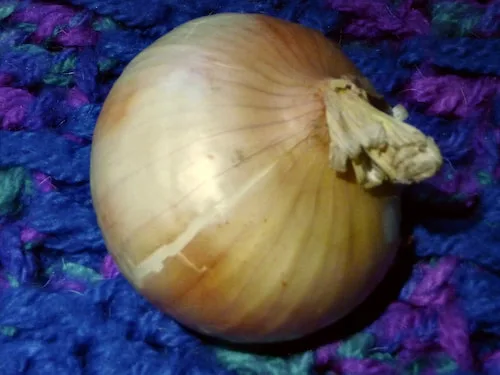
    An onion a day and none will stay,
    A contrary child did think;
    And so, today, curmudgeon Ray
    Doth eat to make a stink.

    Get garlic lei, keep devil at bay,
    More tentative ones would say;
    Not so for Ray who'd rather pay 
    For all to stay away.