• Published on

    A PROOFREADER'S UNEASE

    Picture

    ~Regarding whether in marketing a proofreader might claim to “have proven”~

    That proof is in the pudding
    Is proven after oven;
    But “oven” within “proven”
    Is proved by simple vision.

    So here we see that “proven”
    Is participle likewise
    To “proved” in sentence given;
    No doubt a cause of sad sighs.

    For often it is questioned
    Why these two words should battle
    To prove the most deserving
    To serve as only participle.

    It leaves us quite unsettled
    When choosing “proved” or “proven”:
    What rule “has proved” its truth yet,
    Or what “has proven” certain.

    Though use by country varies,
    Feel safe with “proved” in general.
    It ends in “d” deliberate,
    “Default” the clue in total.

    For adjective, no quandary;
    It's “proven,” recent risen.
    Remember “proved” is also
    The simple past when bidden.
  • Published on

    MANZANITAS

    Picture

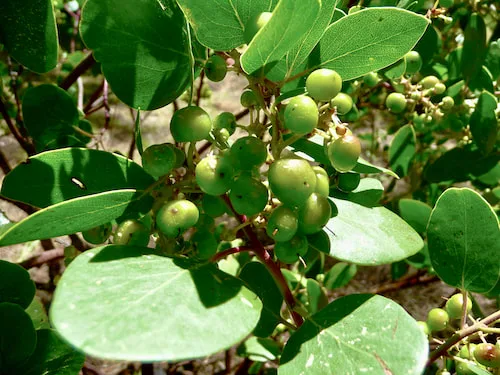
    ​The manzanitas of my dream
    Surpass their wake-bound kin,
    With leaves more green and stems that gleam
    In burnt sienna sin.

    Their branches, thickly glazed and smooth
    Like honey-coated claws,
    Show clear a path for snout and tooth
    Advancing without pause.

    And here no little apples hang
    But massive fruit in reach.
    Low-lying bounty, mighty fang?
    No nightmare this, I preach.


    --Shortfellow (aka Lord Zakwoof of Glenwoof)

  • Published on

    a Happy treat

    Picture

    ​In a moment of evocative contemplation, our four-legged hero likened the joys of his gustatory experience to a “thing of beauty” as described by John Keats.

    A thing of beauty is a joy forever
    Its loveliness increases; it will never
    Pass into nothingness; but still will keep
    A bower quiet for us, and a sleep
    Full of sweet dreams, and health, and quiet breathing.
    —John Keats

    A happy treat is no toy forever;
    Its loveliness increases one's endeavor 
    To stash it quick within the inner keep,
    Intending then to list with welcome sleep,
    And dream of chase and catch and breathless yelping.
    —Shortfellow (aka Lord Zakwoof of Glenwoof)

  • Published on

    since

    Picture

    The word “since” is often misused as a coordinating conjunction. In fact, its only appropriate roles are those of preposition, adverb, and subordinating conjunction. 

    Unlike with coordinating conjunctions, a preceding comma is usually not required—and particularly not so when “since” means “because.” 

    Two noteworthy exceptions calling for the use of commas are the insertion of parenthetical components in a sentence and the lessening of ambiguity when the preceding introductory clause is negative. 

    Of course, as is true of all subordinating conjunctions—not only “since,” moving the subordinate clause to the start of the sentence requires that the relocated clause be followed by a comma.


    The little dog is still incensed
    Since finding skunk at fence;
    Whene'er the scent of skunk is sensed,
    Our dog will take offense.

    And since the skunk was at the fence, 
    There lingers yet a stench;
    And that is quite important since
    Our dog will want revenge.

    So raucous a barking there was had,
    The skunk we've not seen since.
    Unrequited hate is surely sad;
    Our dog may grief evince.


    *The key:
    “Since finding skunk at fence…” (prepositional phrase)
    “since the skunk was at the fence…” (subordinating conjunction, moved to the beginning of the sentence)
    “since our dog will want revenge…” (subordinating conjunction)
    “The skunk we've not seen since…” (adverb)
    “Whene'er…” (like since, whenever is a subordinating conjunction; moved to the beginning of the sentence)


  • Published on

    birds of a feather

    Picture

    When birds of a feather go flocking together
    In brightness or darkness, whatever the weather,
    We think of the oneness that means more than many
    And tells of a majesty greater than any.

    It comes from the message they write in the sky
    As grouped in formation they cursively fly.
    The wonderful mystery we see there expressed
    Is spirit uplifting with outlook most blessed.

    Though seemingly fleeting, it speaks of perspective,
    While posing a challenge to humans collective;
    Consider the angle when viewing the obvious,
    Engage even those who are possibly devious.

    Regardless of image, this art from its nature,
    Conveyed by wee sculptors of limited stature,
    Projects into being a power impressive,
    Belying the size of each unit expressive.

  • Published on

    PLAYMATES

    Picture

    Of creatures on the earth I've seen
    None sporting more than balls have been.
    They come in sizes fit to play
    And pose themselves throughout the day.

    They'll take the path that's planned by staff
    And bound about with stifled laugh.
    They roll and bounce and urge a chase
    That's full of fun in every case.

    When leaping high as if to flee,
    Their legs are hid most cleverly.
    When snatched from air in spinning flight,
    They never yelp or squeal in fright.

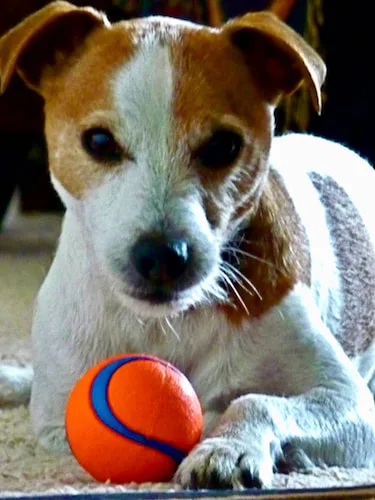
    I keep my favorite ball close by
    Away from interlopers sly;
    My paw stands guard alert to stop
    Their wily plots to grab and swap.

    —Shortfellow (aka Lord Zakwoof of Glenwoof)