• Published on

    THE CANINE IMAGE

    Picture

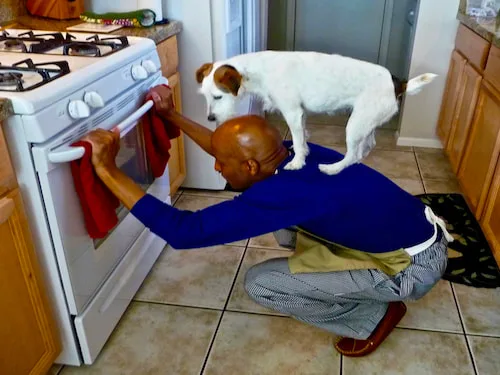
    As modern beings, humans are so attached to the canine norm that the well-known lines of the Divine Image by William Blake suggest an interesting parallel. 

    …To Mercy, Pity, Peace, and Love
    All pray in their distress;
    And to these virtues of delight 
    Return their thankfulness…


    To Mirth and Joy and Foolery great
    Pledge dogs both fierce and mild;
    And for these virtues of delight,
    We keep them by our side.

    For Mirth is in the canine eye,
    And Joy, the canine heart;
    And Foolery swells the canine chest,
    Though never a la carte. 

    Thus all must love the canine norm
    In mutt or Heeler blue.
    Where Mirth and Joy and Foolery dwell,
    There Dog is dwelling too.

  • Published on

    A BASIC TRANSCRIPT CHECKLIST

    Picture

    View cover page to match the notice,
    Case number, caption, jurisdiction.
    The witness name throughout from cover
    Must spell the same with nary fiction.

    Attorneys all on page appearance,
    Phone number, email, address written;
    On index page exhibits scripted,
    Page number, line, description given.

    If no exhibits, marked or clerk-held,
    A statement clear should be on index;
    For read-and-sign with sheets errata,
    Certificates in line with context.

    Interpreter/witness-blurbs that swear-in
    With certs of “Oath” should stand affirming;
    A single cert may serve both parties,
    “INTERPRETED” in caps proclaiming.
  • Published on

    TRANSCRIPTIONAL FIDELITY

    Picture

    Transcript proofreaders can usually expect the text received from the stenographer and/or scopist to be organized as a cover page, an appearance page, and an index page, followed by a chronicling of the proceedings. In addition to detailing the various instances of Q&A and colloquy, the proceedings will include notes on all other developments and events, identifying them as parenthetical components.


    Cover page, appearance page,
    And index page are lead-ins,
    Setting stage to let engage
    The by-lines of proceedings.

    Q&A and colloquy
    Seek progress through their speaking,
    Hindered in reality
    By interruptions tweaking.

    Steno loggers track it all,
    The circumstances quoting,
    Even parenthetical
    Events with care denoting.

  • Published on

    NUMBERS IN LEGAL TRANSCRIPTS

    Picture

    ​To properly transcribe numbers in legal documents, proofreaders are guided by two simple rules and some related exceptions. Among the latter is the presentation of phone numbers, addresses, and years as figures only when they are located at the beginning of sentences.


    When legal transcripts deal with numbers 
    The basic rules are only two.
    Exceptions, though, expand the counting,
    And tell that two can barely do.

    Think first of ten and down to zero,
    Expecting there to spell them out.
    Eleven then and up to heaven,
    Sketch rising numbers, draw them out.

    Exceptions force a switch to digits
    For money, measures, dates, percent.
    Aside from "One," the same with houses--
    And figures that from nouns extend.

    Not all exceptions favor digits,
    Example being sentence starts;
    When numbers get the ball a-rolling,
    It’s mostly time for spelling arts.

  • Published on

    "EM DASH" GALORE

    Picture

    Behold the trusty em dash 
    Of legal transcript lore
    That seeks naught but a calming
    Of interruptions sore.

    As double-dash or single,
    False starts it also soothes;
    So many writs made stable
    That court reporters muse.

  • Published on

    CAPITALIZATION OF NOUNS IN TRANSCRIPTS

    Picture

    In legal transcripts, proofreaders are expected to know a variety of rules determining whether specific words should begin with uppercase letters. Such capitalization is not limited to the beginning of sentences, and in the realm of legal documentation, some unique conventions are known to apply. By the same token, there are also clearly defined situations where words and phrases are correct only if written in lowercase. 


    Of letters in legal transcripts,
    Judiciously all assigned,
    The capital ones most ever
    To prominence are inclined.

    They stand with pride and greatness
    On rules that make them strong.
    Some nouns must be specific,
    Generic versions wrong.

    Take titles for example;
    They uppercase must show
    If fronting names specific
    In real or hinted flow.

    Like titles, “plaintiff,” “defendant”
    Hold capital letters dear;
    The same with “court” and “counsel”
    And more whose names are clear.

    Historical haps and periods,
    Domains in military gov,
    Brand names and institutions, 
    All glow with capital love.

    Not so for mere generics,
    Or seasons broadly hailed,
    Or stage in school and college,
    Or field of coursework scaled.

    This lowercase alikeness 
    Includes degrees as well, 
    Words “doctorate” and “bachelors”
    Not often caused to swell.