- Published on

The greatest wealth is health,
Saith Virgil, versing Rome
Of riches loosely held
In every humble home.
Today, the truth is same
For people high and low;
Regardless name or fame,
Their health is priceless so.
To cherish nature's gift,
Self nourish, exercise.
To wellness make your shift,
Before away it flies.
- Published on

“The faster you run, the sooner you’re done…”
For some a prompting, for others a brake.
If traveling is better and getting there worse,
Then time is your taxi, the one that you'll take.
“The brisker your clip, the quicker your trip…”
A toppling awaiteth despite what you think.
Attend to the path, now swift with its bumps,
A challenge to passage for those who would blink.
“The more the medicine, the merrier the mode…”
Like else we've seen, not straight and true.
Too much a good thing a bad thing becomes,
Affecting adversely with dosage askew.
- Published on

“As fit as a fiddle” is bit of a riddle,
This state we trippingly tout;
Violins in gyms are hardly seen;
So, what's this all about?
Though shapely, poised, and sweetly toned,
They never join a dance.
Athletic gigs they'll not explore,
Except to look askance.
‘Twas accident, that healthy fame;
No fault or shame, no blame.
So “fit for purpose” fiddle was,
Example it became.
Its suitability thus admired
Did not from “hearty” spring;
But now acclaimed, in every mind
A fiddle's a lively thing.
- Published on

Indefinite pronoun, in definite demand,
A stand-in for noun, a proxy in mask;
Too shy and plain to claim the name
Of person/thing behind its task.
“All,” “anyone,” “anybody,” “both,” and “each,”
Like “no one,” “many,” “nobody,” and “none”;
“Enough,” “somebody,” “someone,” “something,”
And “any,” or “either,” or “neither,” and “most.”
Along with “several” and “some” and “few”
Are “anything,” “much,” and ”nothing,” too;
With “everything,” “everybody,” “everyone,” true,
Indefinite pronouns shape the milieu.
They serve as plural, singular, both…
These shadowy aids of nouns in deed;
Not even the variable type will gloat,
Subdued instead like “none” when teed.
- Published on

When “none” serves as an adverb (modifying a verb, adjective, adverb, or even a clause), its meaning is “not at all” or “to no extent.” In the role of a pronoun, however, it can signify several different things, all related to its origin as “not one.” But its ancestor, the Old English nan, had both singular and plural inflections, which makes modern usage very interesting.
Though “none” is more of naught than one,
It calls for all to count
The noun to which it points along
And know the right amount.
For those of us nontechnical,
No abacus to fear;
But meanings hypothetical
Are there to make it clear.
“Not one,” “no one,” “no person,” or
“No part of whole or group”
Will tell of subject singular
When “none” it dares to dupe.
But if not any's to take none's place,
It tells of plural count;
And often when a group “none” plays,
“Not any” may stick around.
So, “None of us do work today;
Yet none is drenched in tears.”
“The bosses plan to dock our pay,
But none of us is scared.”
To check if verb should plural be,
Just switch “not any” in.
If singular there you think you see,
Then test the other kin.
Remember, though, that overlap
Is not a seldom fling.
A plural subject is, perhaps,
The stage for singular thing.
So much will spring from what you mean
And what the context is.
Intention must be clear and clean
For “none” dependencies.
- Published on
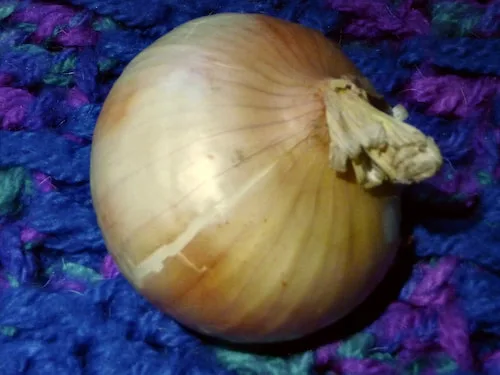
An apple a day keeps doctor away,
A chant in aid of health,
May scare and steer a tot or two
To value nutrient wealth.
An onion a day and none will stay,
A contrary child did think;
And so, today, curmudgeon Ray
Doth eat to make a stink.
Get garlic lei, keep devil at bay,
More tentative ones would say;
Not so for Ray who'd rather pay
For all to stay away.
- Published on

The subordinating conjunction “though” (and its formal cousin “although”) can be a bit tricky for writers.
Although there is some disagreement, when a dependent clause (such as the preceding) occurs at the start of a sentence, a comma separates it from the independent clause that follows.
The uncertainty arises when that same dependent clause appears later in the sentence, possibly in the middle or at the end. Introduced by a subordinating conjunction rather than a coordinating conjunction such as “and,” which would require a comma, this dependent clause may or may not strictly call for one.
Most authorities seem to think that it should reflect the level of contrast that is intended, i.e., to what extent can the second part be seen as negative while the first is positive or vice versa. For those who allow that a comma may be appropriate, it is the strength of this contrast that seems to determine whether such punctuation applies.
“Although” and “even though” do both
Subordinate and join
Contrasting thoughts to main idea;
For strength of difference, coin.
With comma taken in exchange,
“Though” tells of contrast great,
While “even though” will oft not work
Unless emphatic state.
But then a comma it demands,
Such labor never free;
Akin to “though,” and like “although,”
Much contrast is the key.
Expect a subject and a verb
In construct coming next:
“The message shared was deep and true,
Although ‘twas brief in text.”
Across no contrast or just mild,
A payment is withheld:
“She likes an ice-cream sandwich soft
Although it tends to melt.”
No comma there was warranted,
But look at this instead:
“Outside it's snowing, even though
The day is bright, sun fed.”
Since “even though” inherently
Emphatic contrast brings,
It rates a comma usually,
Regardless what it sings.
- Published on
The word this week is “just.”
Though born as righteous, morally upright,
A contrary course its life hath gone.
“Precisely,” “exactly,” new meanings that came,
Decayed with age; no longer were strong.
Unjust it was, this life of “just,”
To “almost exactly,” diminished and sad.
“With tiny-bit difference, enough yet to note,”
And now on to “barely” and “merely,” a fad.
Examples here: “She's just turned twelve,”
And “Give me just a little bit more.”
“I'm just a regular Joe, you know.”
“She wants him just as friend, no more.”
So adjective, adverb, whatever the role,
As frequent pal this “just” will serve.
No goal ahead to wed or to bed,
Instead a glory remembered, preferred.
Perhaps, one day “just so” and “fair”
Will make a resurgence, such usage now rare;
If only reminding of change not to care
Or granting the wish that true “justice” may bear.
- Published on

Here's a simple word that has several different meanings depending on context. For those of us who like to write, it's a relief knowing that the rules for accompanying commas are not nearly as numerous!
With meanings multitudinous,
It stars in many spheres;
Yet humble is this tiny word
That's known as “with” to peers.
It merely serves in front of nouns,
A link for items prior,
While in this prepositional role,
Conspiring to inspire.
It fills with awe all those who see
The subtly varied sense
Conveyed in ways for granted took
Regardless of one's lens.
At times it says “in company of,”
Or “as a complement to,”
Or “using,” “given,” like “despite,”
And “of ingredient,” too.
Then “in possession of” no less
Than “in the manner of”
Along with “an associate of”
Are synonyms enough.
“He walks with Liz, who smiles with glee
And sprightly with new shoes.
They go well with her frock, you see,
While made with silk in twos.
For those who write with pen and ink
And think of comma's place
(Perhaps a tutor still with school,
Who stands with book at grace),
It's known that “with” no comma takes
Unless in rare estate,
At sentence mid or near the end
For nonessential fate.”
Let's toast this word so versatile,
Though yet in letters short.
Let's drink to speech unlimited,
With nary a drunken snort.
*The key:
He walks with Liz… (“in company of”)
Who smiles with glee… (“in the manner of”)
And sprightly with new shoes… (“in possession of”)
They go well with her frock… (“as a complement to”)
While made with silk… (“of ingredient”)
For those who write with pen and ink… (“using”)
Perhaps a tutor still with school… (“an associate of”)
Who stands with book… (“in possession of”)
With meanings multitudinous… ("given")
With nary a drunken snort… (nonessential phrase at end of sentence; separated by a comma)
- Published on

Through ages of injuries an agent
For cleaning out wounds revered
Was hydrogen peroxide resplendent
To many a parent concerned.
Remember how quick they applied it
When as a child you were hurt;
For owies and cuts, lacerations,
A fizzing and stinging occurred.
New knowledge now of peroxide,
Serves warning but not good cheer.
Informing of action that inside
Doth kill more than it should dare.
Like “antibiots” for bacteria,
Destroying the bad and the good,
Peroxide of hydrogen is terror,
Through wanton destruction in ‘hood.
No doubt its cleansing prowess;
But cells beginning repair,
Like others we know as infectious,
Are crippled beyond compare.
Be careful of hydrogen peroxide;
It's not a friend of wounds.
Its action is indiscriminate;
No cells are left in tune.